


Everyone in the B2B services world deals with longer sales cycles. Well, at least those with high-ticket offerings and especially those dealing with mid-market and larger client bases. Which begs the question, how can we shorten the sales cycle? Because if we can shorten the time from lead to closed deal, we can increase revenue trajectory, which ultimately creates a hockey stick effect to our businesses’ success.
Now I could write a multi-volume series of books on this subject and still not cover all of the bases, so please don’t read this short blog and think this is all there is. My goal here is more to whet your whistle and get you pointed in the right direction. If you have a sales leadership team, share this blog with them and use it as a discussion starter. “And if you read this and are still lost, get help—whether from your internal team or a partner like us.
So with all that said, let’s dive into how you can shorten your sales cycle.
Table of Contents:
Why B2B Sales Cycles Take So Long
How to Shorten a Long B2B Sales Cycle
How Do You Shorten Sales Cycles Without Discounting?
FAQs About Shortening B2B Sales Cycles
Sales Cycle vs Sales Velocity
Before we go any further, let’s get clear on terms. When I say “sales cycle,” I’m talking about the number of days between the first meaningful contact with a prospect and a signed agreement. Sales velocity, on the other hand, is simply how quickly qualified opportunities move through that cycle across your entire pipeline.
Why does that matter? Because shorter cycles don’t just create a nicer-looking “hockey stick” graph, they give you faster feedback on what’s working. They allow for cleaner forecasting for your leadership team and less cash and energy tied up in “maybe” deals that never seem to close. We’re not trying to rush buyers through their buying journey, we’re trying to remove friction so the right ones can say “yes” (or “no”) faster.
Why B2B Sales Cycles Take So Long
If you’re like many of the B2B service firms we work with, you’ve sat through those Monday meetings where the lead-to-sale report hasn’t changed in weeks. Deals stall due to internal bureaucracy within prospect organizations, updates blur with the increasingly ignored follow up communications and everyone’s starting to worry if the quarterly goals are going to be met.
Long cycles often have less to do with the buyer’s hesitation and more to do with your team’s coordination. Buyers today research deeply before ever engaging sales, so by the time they reach you, they expect clarity and speed.
Here are the biggest causes of delay:
| Cause | What It Looks Like | Why It Hurts |
| Poor qualification | Leads aren’t budget-fit or authority-fit | Reps waste time persuading people who can’t buy |
| Misaligned messaging | Marketing says one thing, sales says another | Creates doubt and slows decisions |
| Manual follow-ups | Reps follow up “when they remember” | Momentum dies after initial contact |
| Undefined next step | Prospect leaves the call unclear on what happens next | Deals vanish into “let me think about it” land |
When your pipeline has consistent messaging, automated touchpoints, and shared visibility, sales velocity increases naturally. Here’s what happened when we aligned those pieces for one B2B service firm:

"Since working with Buzzworthy [Strategies], we have established a lasting presence in our industry and added $100,000 in ARR with new clients in the first sprint [90-days]. Buzzworthy Marketing exceeds expectations. They’re overachievers who provide high-quality deliverables ahead of schedule."
Aaron Mills
Founder & CEO, Daaxit, LLC
How to Shorten a Long B2B Sales Cycle
1. Pre-qualify with smarter marketing
Start upstream. Your ads, blogs, and outreach should attract intent, rather than curiosity; otherwise, you’ll spend months educating poor-fit prospects. Build your content to answer the questions real buyers ask right before they’re ready to talk. Not every “good lead” is a good prospect for your business. To have a shorter, saner sales cycle, your marketing needs to go beyond generating conversations with anyone who will give you the time of day and attract the kind of buyers who are likely to become profitable long-term clients.
A qualified B2B service prospect usually checks boxes like:
- Right-fit industry and company size – They live in the market you’re actually built to serve, not just anyone with a pulse and a logo
- Clear owner or internal champion – There’s someone who feels the pain, has influence, and is willing to move the conversation forward
- Budget aligned with your minimums – They can afford your fees without you discounting yourself into regret
- Realistic timeline – They’re looking to act in the next 30–120 days, not “maybe sometime next year.”
- Problem you’re actually built to solve – Their main struggle sits squarely in your wheelhouse, not on the edge of your expertise
In the end, you’re looking for your version of a predictably profitable prospect: the kind of client who fits your model, respects your process, and sticks around long enough for everyone to win.
And remember, you’ll shorten the sales cycle just as much by quickly disqualifying bad-fit deals as you will by speeding up the good ones. The faster you can say “no” to the wrong opportunities, the more room you have to move the right ones across the finish line.
2. Standardize your talk tracks and proposals
Repetition builds confidence. Develop a master playbook that outlines your sales story, value propositions, and top objections. Record your best calls, use snippets for onboarding, and store all assets inside your CRM. When buyers sense consistency, it reinforces the dependability and credibility of your company. It can also lay the groundwork for disqualifying prospects, opening up bandwidth to attend to new leads or nurturing current ones more attentively.
3. Automate every handoff between teams
Your CRM should handle the administrative drag: assigning tasks, setting reminders, sending pre-meeting prep emails, and updating deal stages automatically. Every time a human has to remember something, time is lost. Also, humans are inconsistent, and we just lined out why consistency is important.
Even with great automation, you still need a few simple operating rules that everyone agrees to follow. Think of these as the ground rules for how leads move through your system:
- How fast new leads get a human reply (for example: every new inquiry gets a personal response within one business day)
- How many meaningful touches happen before a lead is recycled or moved back to nurture?
- When and how sales loops client success into the conversation so handoffs don’t get dropped
And you don’t need a policy binder. You need a one-page set of rules that marketing, sales, and leadership have all said “yes” to—and that shows up in your weekly meetings. Automation keeps the lights on; these shared rules keep everyone moving in the same direction.
Smart automation examples:
- Auto-assign a task to reps when a lead reaches a certain engagement score
- Trigger a “What to expect next” email the moment a proposal is sent
- Re-engage dormant deals after 14 days of inactivity with a check-in message
4. Track engagement signals and adjust fast
Review your analytics weekly with your marketing and sales leadership and look for holes in the client journey. Paying attention to each phase of the sales cycle can uncover opportunities to shorten the time from visibility to new clients.
|
Stage |
Common Bottleneck |
Possible Fixes |
|
Nurture |
Low email reply rate |
Test a new compelling call to action |
|
Discovery |
Low show rate |
Add SMS confirmations and a same-day reminder |
|
Proposal |
Long review time |
Use short video walkthroughs instead of PDFs |
|
Contract |
Internal delays |
Implement e-sign tools and simplified terms |
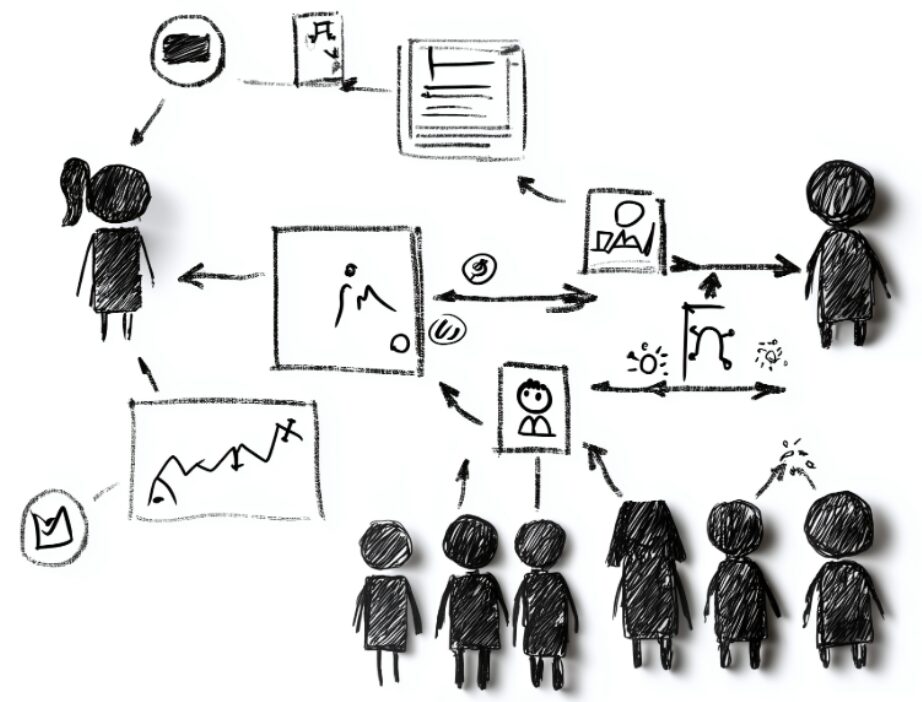
If you are selling to mid-market and enterprise companies, you’re not the only one selling. After that first great discovery call, your main contact has to turn around and sell your solution internally to their CFO, COO, IT, or a formal buying committee. If you don’t equip them to do that, deals die in “internal review.”
Make it easy for your internal champion to champion you. Give them:
- A one-page summary they can forward that spells out the problem, your proposed approach, and the business outcome in plain language.
- A short 3–5 minute video walkthrough of the ROI, key risks, and implementation plan they can drop into a Slack channel or internal email.
- A simple timeline they can paste into their update: “Week 1–2: discovery, Week 3–4: implementation, Month 2: first measurable win.”
The faster you help your champion answer, “What are we doing, why now, and what’s the upside?” for their stakeholders, the faster your proposal moves from “interesting” to “approved.”
- Simplify your offer so decisions are easier
One of the biggest hidden drivers of long sales cycles is complexity. If every proposal is a custom build, every deal requires your buyer to run a mini consulting project just to understand what they’re approving. That guarantees more internal meetings, more “let me run this by finance (or my partner),” and more deals that stall out in the gray zone.
The best way to approach this issue is to package your offer so decisions are clear.
Give buyers 2–3 simple options, each with:
- A clear outcome (“Here’s what this engagement is designed to achieve.”)
- A defined timeline (“Here’s how long it typically takes and what happens in each phase.”)
- A transparent investment (“Here’s the fee structure and what’s included.”)
Fewer variables mean fewer internal debates and faster yes/no decisions. Instead of wrestling with ten different line items and custom caveats, your champion inside the company can say, “We’re choosing Option B because it gets us X result by Y date for Z budget.”
When your offers are productized and easy to compare, you shorten the sales cycle not by pushing harder, but by making it effortless for the right clients to move forward.
How Do You Shorten Sales Cycles Without Discounting?
When sales teams get desperate, there is a tendency to discount services. And if you are a founder-led sales team, you are more likely to do it. We do this because we believe that discounts speed up decisions, which they do to some degree, but they also shrink profit margins and weaken perceived value. Instead of shooting yourself in the foot, try some of these tactics to accelerate through clarity and confidence:
- Make ROI concrete. Show financial outcomes from case studies rather than vague benefits.
- Clarify risk. Offer transparent terms, easy opt-outs, or phased engagements so buyers feel safe committing.
- Create urgency with timing, not price. Frame your offer around momentum: “Starting this quarter positions you for next quarter’s results.”
- Use micro-commitments. Break large deals into smaller, sequential wins to keep deals moving, like a paid audit or pilot project.
It is my opinion that discounting your services does more damage than good. Over the years, every time I’ve discounted my services to get a contract, I have regretted it in three major ways:
- Bargain shoppers always expect to get more than what they paid for, even when they know they’ve received a discount.
- Clients who can’t pay full price usually are more desperate for immediate results and quickly become thorns in your entire team’s side.
- Cheap clients rarely give great testimonials and usually refer other people looking for the same discounts.
Bottom line, discounting will cost you time, energy, money and your reputation. So if you have to decide between a longer sales cycle and discounting—take the longer sales cycle. Your balance sheet and sanity will thank you for it in the long run.
FAQs About Shortening B2B Sales Cycles
Q: What’s considered a healthy B2B sales cycle length?
For most service firms, 60–90 days is the sweet spot. Simpler engagements may close in 30 days, while enterprise contracts can take 120+. Anything beyond that usually points to qualification or process gaps.
Q: How can marketing directly reduce sales cycle time?
By aligning campaigns with buyer readiness instead of brand awareness. Thought-leadership content should answer late-stage questions (like cost, implementation, proof) so by the time a lead converts, the groundwork is done.
Q: How should sales and marketing align?
Build one shared dashboard. Marketing tracks leads until “sales-ready,” then sales tracks velocity and feeds back into content planning. This keeps messaging unified and removes guesswork from both sides.
Q: Which tools make the biggest impact?
A well-structured CRM with built-in automation. GoHighLevel, HubSpot, and Salesforce each offer pipeline automation, lead scoring, and nurture sequences that replace manual chasing.
Q: How do client success teams influence future sales velocity?
When onboarding is smooth and results come early, clients are more likely to renew, refer, and provide social proof. Those assets shorten the next buyer’s journey dramatically.
Q: What metrics show improvement in cycle time?
Watch lead-to-close rate, pipeline velocity, and average touch count per deal. If your time-to-close drops but quality stays high, your system is working.
Key Takeaways: 5 Levers to Shorten Your B2B Sales Cycle
If you remember nothing else from this article, remember these five levers:
- Attract better-fit leads with intent-driven content.
Build your marketing around the late-stage questions real buyers ask right before they talk to sales: pricing, proof, implementation, and risk. - Standardize your talk tracks, proposals, and next steps.
A consistent story, a clear set of options, and a defined “here’s what happens next” shrink the space for hesitation and confusion. - Use your CRM to automate every “don’t drop the ball” moment.
Let the system handle reminders, handoffs, and follow-ups so your team can focus on real conversations instead of admin. - Watch engagement signals weekly and fix bottlenecks by stage.
Look beyond total pipeline value. Look at where deals are stalling at nurture, discovery, proposal, or contract, and make targeted changes. - Protect your pricing—speed up decisions with clarity, not discounts.
Make ROI, risk, and next steps so clear that the right clients feel confident saying yes at full price, instead of nudging you toward a discount.
When your marketing filters the right audience, your CRM automates consistent follow-up, and your sales team tells a unified story, buyers stop dragging their feet.
Clean systems create fast decisions, healthy pipelines, and higher margins.
Book your growth review today and identify where your sales cycle slows down and how unified systems can help you close deals faster.