

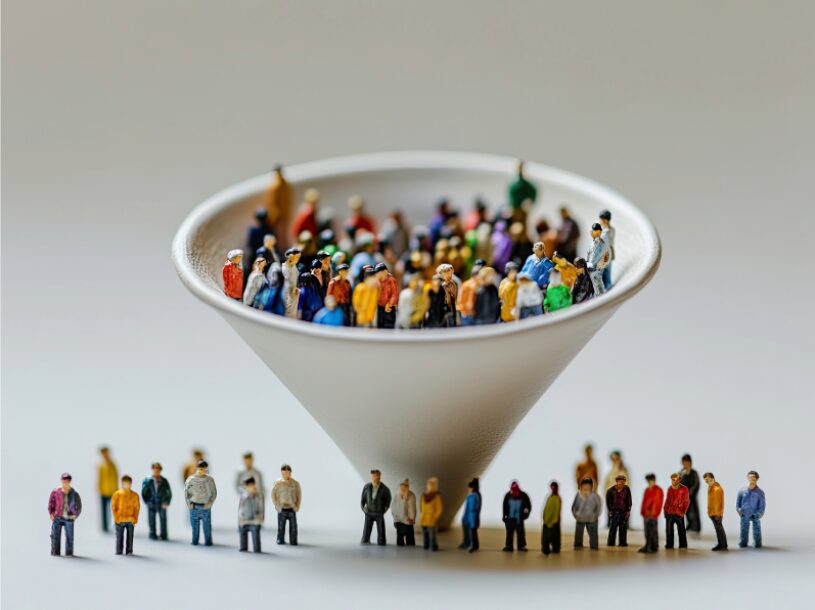
How to Build a B2B Marketing Funnel That Actually Works
By Michael Buzinski, Founder/CEO & Fractional CMO
Most funnels fail because they’re built as isolated marketing campaigns instead of one connected revenue system. A working B2B funnel creates momentum across marketing, sales, and client success so prospects move cleanly from awareness to advocacy. When every stage is defined, owned, and measured, your funnel stops leaking and starts compounding.
Why Most B2B Funnels Break
You struggle to get results from your funnel when:
- it chases volume instead of qualified buyers
- marketing and sales define success differently
- handoffs are inconsistent or undocumented
- the funnel ends at the sale instead of onboarding, retention, or expansion
A real funnel guides every touchpoint inside one unified process.
What a Working B2B Funnel Includes
A functional funnel is a flywheel. Each stage should build momentum for the next:
Attract
Create right-fit demand through clear positioning and authority content.
Approve
Qualify prospects using shared criteria and aligned expectations.
Activate
Onboard efficiently and deliver the first measurable win quickly.
Anchor
Sustain value with proactive communication and outcome-based management.
Advance
Expand accounts through additional services that deepen impact.
Advocate
Turn results into referrals, testimonials, and case studies that spark new demand.
When these stages run together, your funnel becomes predictable instead of reactive.

How to Build a Funnel That Actually Works
Follow these six steps to turn your marketing funnel into a system that creates consistent revenue:
1. Run a Funnel Diagnostic
Map each stage from Attract to Advocate. Compare what should happen with what actually happens. Find friction: slow responses, unclear handoffs, missing proof, or bottlenecks that stall deals.
2. Align Marketing, Sales, and Client Success
Define one shared qualification standard. Assign ownership for each stage. Set rules for:
- entry
- progression
- exit
- response time
Simple, documented alignment removes most leaks.
3. Improve Your Nurture Sequences
Use a question-based nurture path. Answer the questions prospects naturally ask as they move through the stages. Support with assets like:
- short case snapshots
- comparison guides
- implementation timelines
- ROI calculators
Sequence them across email, LinkedIn, and video.
4. Automate for Consistency
Automation keeps promises. Use it to:
- acknowledge leads instantly
- route by role or need
- enforce required data
- trigger reminders
- surface risk or opportunity signals
But keep value conversations human.
5. Close the Feedback Loop
Turn client success into a growth engine. Use monthly health scores, quarterly planning packs, and tagged win/loss reasons to refine messaging and prioritization.
6. Track the Metrics That Predict Revenue
A working funnel needs only a few weekly numbers:
- qualified leads by source
- response time
- stage-to-stage conversion
- sales velocity
- average cycle length
- retention and expansion
These metrics expose leaks and forecast revenue accurately.

"Buzzworthy Strategies has helped us bring clarity and focus to our marketing and sales funnel. They built a connected system that finally gives us measurable, predictable results. The communication and responsiveness have been outstanding."
Eric Calinisan
CEO, Calinisan Management Services
FAQs about B2B Marketing Funnels
How is a funnel different from a revenue engine?
A funnel captures leads. A revenue engine connects marketing, sales, and client success so leads become long-term clients.
How do I know my funnel is broken?
You’ll see cold CRM contacts, dropping conversions, long cycle times, or finger-pointing between teams.
What’s the biggest leak in B2B funnels?
Handoffs. Most revenue is lost between marketing → sales → client success.
Do I need new tools to fix my funnel?
Usually no. Most firms already have the tools, but they aren’t connected or configured for consistency.
The Takeaway
Your funnel doesn’t need a rebuild, it needs cohesive, effective structure.
Schedule a Growth Diagnostic today and uncover where your funnel is leaking and how fast you can turn it into a predictable system.