

Why Do Most B2B Marketing Funnels Fail?
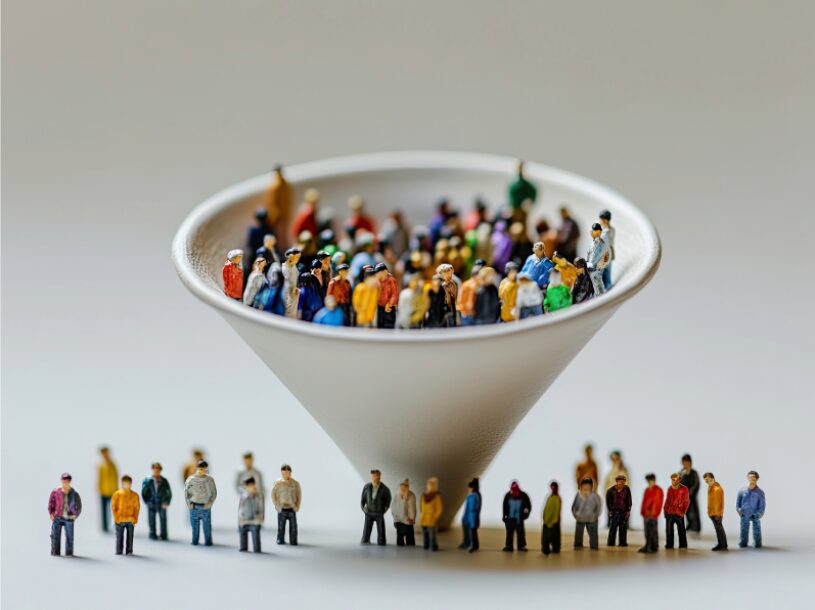
Most B2B funnels fail because they aren’t built as part of a connected system. You may have campaigns, ads, content, and lead forms running, but if marketing, sales, and client success operate on separate tracks, leads fall through the cracks. A working funnel depends on clear handoffs, consistent follow-up, and one system that moves buyers from awareness to advocacy without friction.
The Funnel Problem No One Talks About
Most funnel diagrams stop at “lead capture,” but real revenue happens after someone fills out a form. B2B firms lose deals because the funnel isn’t connected to:
- the sales process
- onboarding
- retention and expansion
- long-term advocacy
When each stage is disconnected, prospects leak out faster than they come in.
Four Reasons B2B Funnels Fail
1. You’re built for volume instead of buyers
sqLarge lead counts look good on dashboards, but unqualified leads overload your sales team and burn time. You need fewer, higher-fit leads, not more noise.
2. Marketing and sales play different games
Marketing celebrates MQL volume. Sales celebrates SQL wins. Without one shared definition of a qualified buyer, friction is guaranteed.
3. The handoff is undefined
If your CRM doesn’t automate assignments, reminders, or follow-ups, leads go cold fast. Missing or sloppy handoffs can cut close rates in half.
4. Your funnel ends too early
Most funnels stop at “won,” but the real growth happens through onboarding, retention, expansion, and referrals. Every client interaction is part of the funnel.

What a Working Funnel Actually Looks Like
A working funnel behaves like a flywheel, not a triangle. Each stage creates momentum for the next:
- Attract → create and capture demand
- Approve → qualify and align
- Activate → deliver first value quickly
- Anchor → reinforce outcomes and reduce risk
- Advance → expand the account
- Advocate → turn wins into referrals and case studies
A connected system compounds results instead of resetting every quarter.
Quick Proof

"Buzzworthy Strategies has helped us bring clarity and focus to our marketing and sales funnel. They built a connected system that finally gives us measurable, predictable results. The communication and responsiveness have been outstanding."
Eric Calinisan
CEO, Calinisan Management Services
How You Fix a Failing B2B Funnel
1. Diagnose where the leaks happen
Map the six stages and document what should happen vs. what actually happens. This reveals friction, delays, and weak handoffs.
2. Align the team on shared definitions
Choose one standard for qualification (P3P works best), response times, and exit/entry rules for each stage. Give each stage one owner.
3. Improve your nurture sequences
Answer the right questions in the right order. Use simple assets like case snapshots, timelines, and ROI guides.
4. Automate for consistency
Automation should support human trust, not replace it. Keep responses instant and handoffs clean.
5. Close the feedback loop
Client success insights should fuel marketing, messaging, and expansion. Outcomes → proof → authority.
6. Track the metrics that matter
Monitor:
- stage-to-stage conversion
- velocity
- response time
- retention and expansion
These tell you the health of your funnel long before revenue shows up.
FAQs about B2B Marketing Funnels
What’s the difference between a funnel and a revenue engine?
A funnel gathers leads. A revenue engine connects marketing, sales, and client success so leads stay, expand, and refer.
How do I know if my funnel is broken?
If your CRM is full of cold contacts or your teams blame each other, you have funnel leaks and system disconnects.
Where do most funnels leak?
At handoffs: marketing to sales, sales to onboarding, and onboarding to retention or expansion.
How long does it take to fix a funnel?
Most firms see measurable improvements within 60–90 days once the system is aligned.
The Takeaway
Most funnels fail because they aren’t running as one system. When your funnel aligns with your buyer journey and your teams operate from the same playbook, everything moves faster and further.
Ready to find your funnel leaks?
Schedule a Growth Diagnostic today and see where predictable revenue begins.